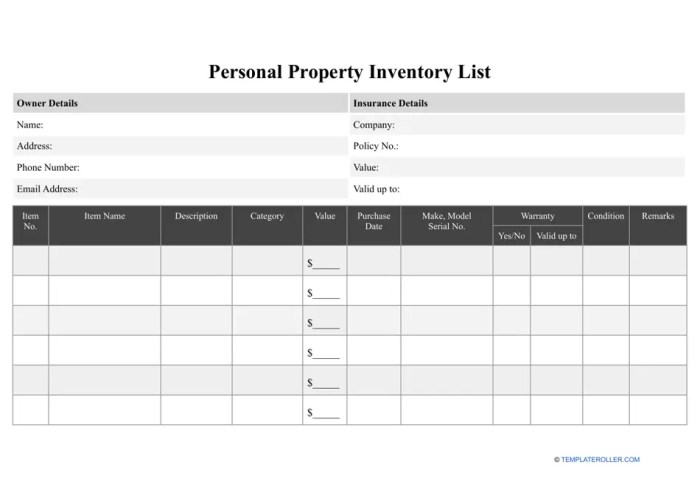
Creating a Personal property inventory checklist is more than just a task; it’s an essential strategy for safeguarding your possessions. With the whirlwind of daily life, it’s easy to overlook the value of keeping track of what you own, but this checklist serves as a practical guide to help you stay organized and informed.
By understanding the different types of personal property, such as tangible items like electronics and furniture, as well as intangible assets, you can build a comprehensive inventory that reflects your lifestyle. Whether for insurance purposes or simply to manage your belongings better, an inventory checklist is a smart move.
Creating a Personal Property Inventory Checklist
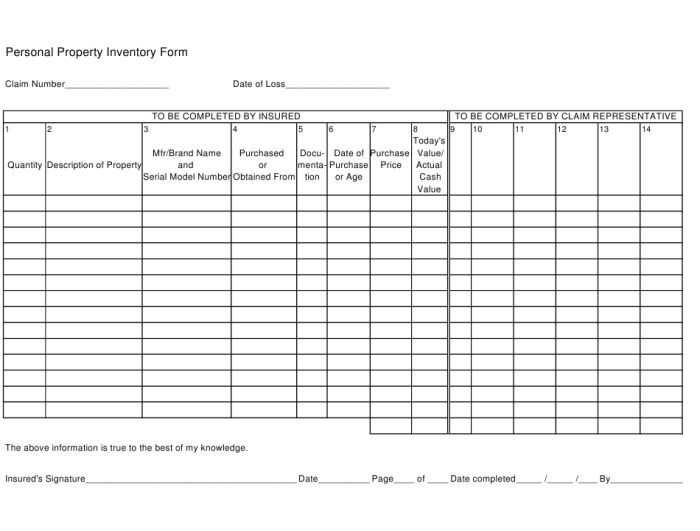
Establishing a personal property inventory checklist is an essential step in protecting your assets and preparing for unforeseen circumstances. This checklist not only helps in assessing the value of your belongings for insurance purposes but also serves as a reference during moves or in case of theft or loss. Creating a comprehensive personal property inventory checklist involves several steps that ensure the completeness and accuracy of your records.
By systematically categorizing your items and noting important details, you can create an effective inventory that meets your needs.
Steps to Create Your Checklist
To begin creating your personal property inventory checklist, follow these steps:
1. Gather Materials
Collect a notebook or a digital device to record your inventory.
2. Categorize Your Items
Organize your belongings into categories such as electronics, furniture, and valuables. This makes it easier to locate specific items later.
3. Document Each Item
For each item, record the following details:
Item Description
Value (purchase price or estimated current value)
Condition (new, good, fair, or poor)
Location (room or storage area)
4. Take Photos
Include photographs of high-value items or those with unique features to support your records.
5. Review and Update Regularly
Make it a habit to review and update your checklist annually or after significant purchases.
Examples of Items to Include
Including a variety of items in your checklist ensures you have a complete overview of your belongings. Here are some categories with examples:
- Electronics:
- Smartphone
- Television
- Laptop
- Furniture:
- Sofa
- Dining table
- Bed frame
- Valuables:
- Jewelry
- Artwork
- Collectible items
Organizing Your Checklist Using a Table
Utilizing a table can significantly enhance the organization of your inventory. Here’s a simple table format you can use to keep your information clear and accessible:
| Item Description | Value | Condition | Location |
|---|---|---|---|
| Smartphone | $700 | Good | Living Room |
| Dining Table | $300 | Fair | Dining Room |
| Gold Necklace | $1500 | Excellent | Bedroom |
Maintaining an updated inventory not only aids in protection against loss but also provides peace of mind about your possessions.
Managing and Updating Your Inventory
Regularly updating your personal property inventory is crucial for maintaining an accurate record of your assets. This practice not only helps in efficiently managing your belongings but also ensures that you are prepared for any unexpected circumstances, such as theft or natural disasters. Keeping your inventory current allows you to quickly assess your possessions for insurance purposes, resale opportunities, or estate planning.Tracking changes in property, such as acquisitions or disposals, is essential for maintaining an up-to-date inventory.
By documenting new items as they are purchased or sold, you can avoid discrepancies that may arise from forgetting details over time. Creating a systematic approach to updating your inventory will save you time and effort in the long run, as well as provide peace of mind knowing that you have a comprehensive view of your assets.
Methods for Tracking Changes in Property
Implementing effective methods for tracking changes in your personal property inventory can streamline the process. Here are some practices to consider:
- Log New Acquisitions: Every time you acquire a new item, immediately log it into your inventory. Include details such as the date of purchase, cost, and any relevant serial numbers.
- Document Disposals: When disposing of items, whether through sale, donation, or disposal, update your inventory accordingly. Recording the date and method of disposal provides clarity on your current holdings.
- Set Regular Review Intervals: Schedule regular reviews of your inventory, such as quarterly or annually, to ensure all changes are captured. This practice prevents oversights and keeps your records fresh.
Digital tools and apps can significantly simplify inventory management, offering features that make tracking changes intuitive and efficient. Here are tips for selecting the right platform:
Choosing Digital Tools for Inventory Management
When looking for digital solutions to manage your inventory, consider factors that align with your needs:
- User-Friendly Interface: Select an app that is easy to navigate. A straightforward layout will help you quickly add or remove items, making updates less cumbersome.
- Cloud Storage Options: Opt for tools that offer cloud storage, ensuring your inventory is accessible from any device and protected against data loss.
- Customizable Features: Look for apps that allow you to customize fields and categories according to your specific needs, making it easier to tailor your inventory to reflect your personal belongings.
- Mobile Compatibility: Choose platforms compatible with mobile devices, enabling you to update your inventory on the go, which is especially useful when acquiring or disposing of items in real-time.
Incorporating digital tools into your inventory management not only simplifies the process but also enhances accuracy. By regularly updating your records and utilizing modern technology, you can maintain a clear and comprehensive overview of your personal property.
Concluding Remarks
In conclusion, having a well-organized Personal property inventory checklist not only aids in managing your assets effectively but also provides peace of mind. Regular updates and utilizing digital tools can enhance this process, ensuring that you’re always aware of your property status. Dive into this practice, and you’ll find it invaluable for both everyday life and long-term planning.
Answers to Common Questions
Why is a personal property inventory checklist important?
It helps you keep track of your belongings, supports insurance claims, and aids in loss prevention.
How often should I update my inventory?
You should update your inventory at least once a year or whenever you acquire or dispose of significant items.
Can I use apps for creating an inventory checklist?
Yes, many apps are designed to simplify the inventory process, offering features for tracking and organizing items.
What items should I include in my checklist?
Include all valuable items, such as electronics, furniture, jewelry, and important documents.
Is it necessary to document the condition of items?
Yes, noting the condition helps in evaluating the value and can be crucial for insurance purposes.


